
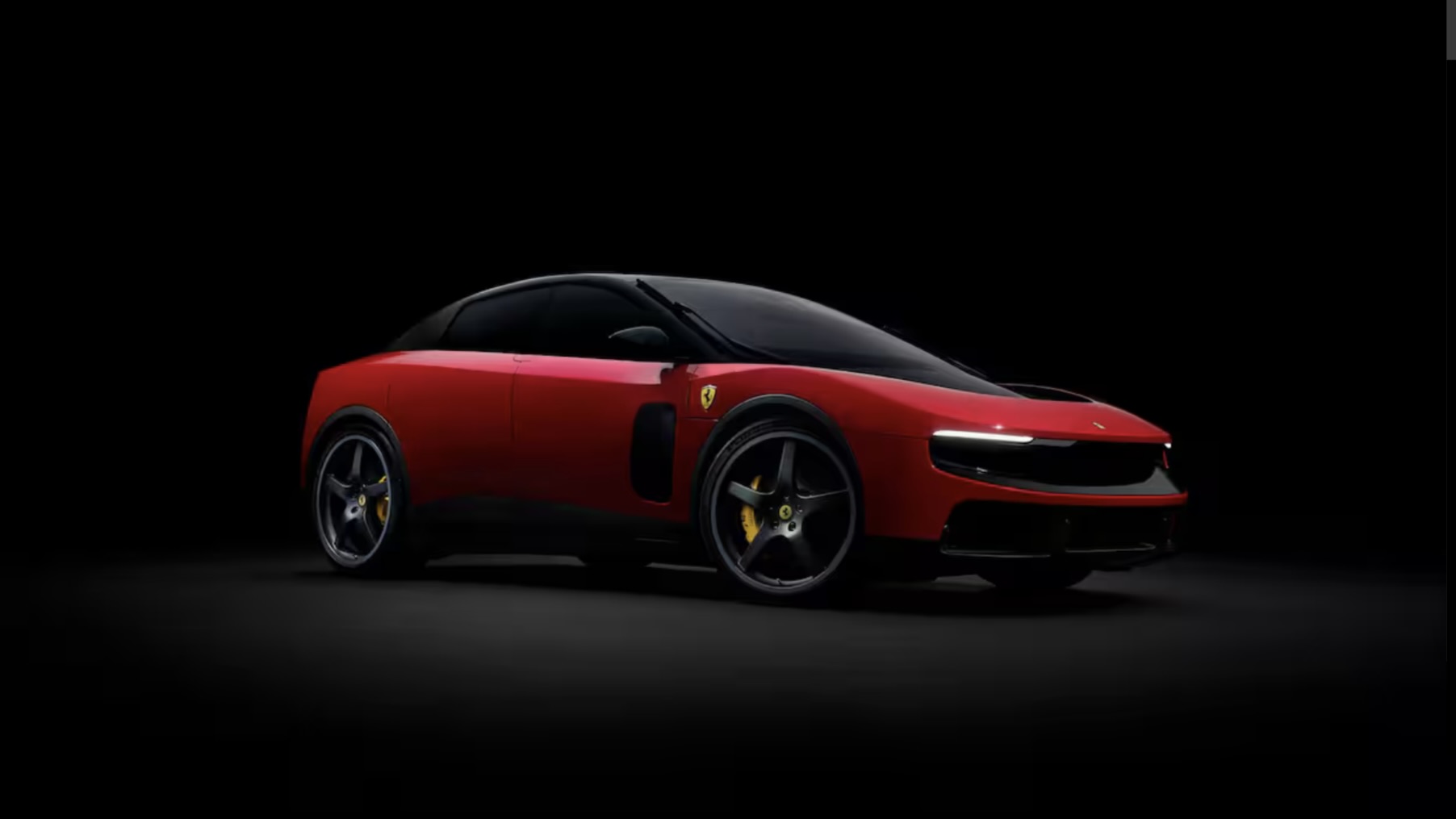
Ferrari’s first electric car has been unveiled in Rome. It is spectacular, radical, unlike anything Maranello has ever built, and designed partly by the man who gave us the iPhone. It also weighs 2,260 kilograms. Ferrari would like to talk about the performance figures. We would like to talk about all of it.
Ferrari has built an electric car. That sentence, which ten years ago would have been filed somewhere between flying pigs and a London parking space under a fiver, has become fact. The Ferrari Luce was revealed in Rome yesterday, completing a three-act reveal that began with a technical specification sheet last October, continued with interior teasers in February, and ended with the full car being shown in the city that has been Ferrari’s spiritual home since the beginning. Luce means light. Ferrari’s first electric car is named after something that travels in silence. Nobody at Maranello appeared to find this ironic.
The numbers first, because they are extraordinary and need to land before anything else. Four electric motors — one at each wheel, derived directly from the F80 hypercar. Combined output of 1,035 horsepower, peaking at 1,113hp. A 122kWh battery pack co-developed with SK On. Zero to 100 kilometres per hour in 2.5 seconds. Top speed of 309 km/h. Range of approximately 531 kilometres. Starting price of €550,000, which is approximately £475,000 in the United Kingdom. And a kerb weight of 2,260 kilograms. We will come back to that last one.
The car was revealed in Rome rather than Maranello or a motor show, which tells you something about how Ferrari sees this car’s audience. This is not a product for the people who used to buy 360 Modenas and track them on weekends. This is a product for five people who want to travel from Rome to Milan in profound silence at 309 kilometres per hour while Jony Ive’s interior treats them to an acoustic environment derived from the actual mechanical frequencies of the motors rather than anything synthetic. It is a fundamentally different proposition from every other Ferrari ever made. Ferrari knows this. Ferrari has done it anyway.
“It challenges just about every assumption of what a Ferrari should look like, who should sit in it, and how it should sound — while being unmistakably, stubbornly Ferrari in the ways that matter most: emotions.”
— ELECTREK, WHO FLEW TO ROME AND SPENT 30 MINUTES WITH THE CAR. THEIR VERDICT IS THE MOST HONEST EARLY TAKE AVAILABLE.
THE WEIGHT QUESTION
A Ferrari 812 Superfast weighs 1,630 kilograms. A Lamborghini Revuelto, with a V12 and three electric motors and four-wheel drive, weighs 1,772 kilograms. A Porsche Taycan Turbo GT — the benchmark for heavy electric performance cars — weighs 2,295 kilograms. The Ferrari Luce, at 2,260 kilograms, is actually 35 kilograms lighter than the Taycan Turbo GT. This is the comparison Ferrari would prefer you make. Man of Many made it. It is technically accurate.
It is also, if we are being straightforward, the wrong comparison. A Taycan is a Porsche saloon. A Ferrari is supposed to be something that makes you feel things in corners. Ferrari’s counter-argument involves the Side Slip Control system in its tenth iteration, fully independent torque vectoring, advanced computational dynamics and a chassis setup that they say disguises the mass almost entirely. This may well be true. We have not driven it yet. What we know is that 2,260 kilograms is a number that would have made Enzo Ferrari put the phone down, and the engineering team at Maranello will need to demonstrate convincingly that it does not matter. We are giving them the benefit of the doubt because Ferrari has earned it. We are not simply taking their word for it, because no one should simply take anyone’s word for 2,260 kilograms.
JONY IVE AND WHAT HE DID INSIDE
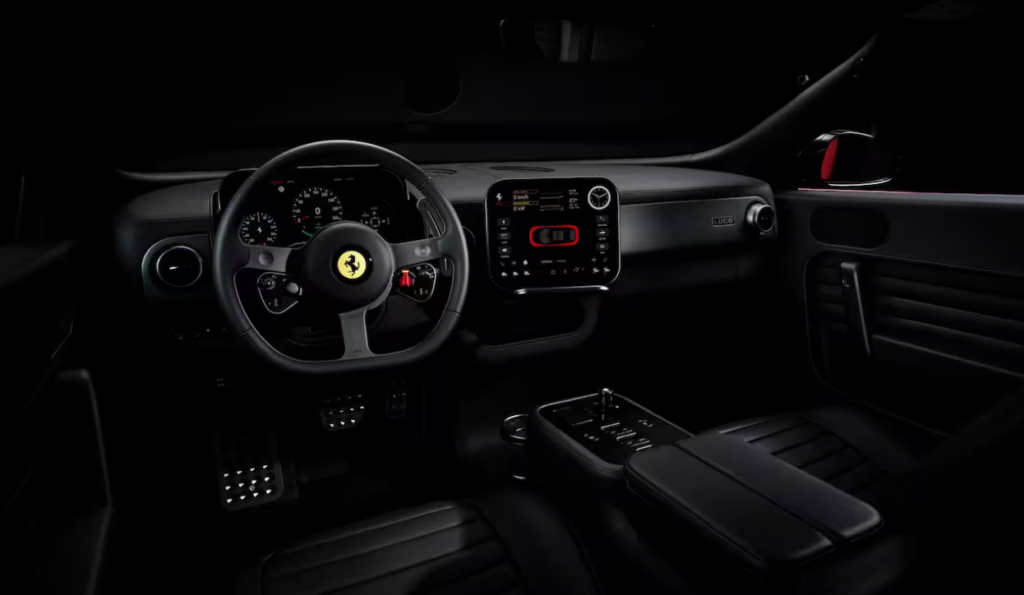
The interior is where this car becomes genuinely extraordinary and where the Jony Ive collaboration earns every word written about it. Ive and his studio LoveFrom, alongside Marc Newson, designed the cabin as a single continuous environment rather than a collection of components. There are no buttons in any conventional sense. The HVAC operates through a vent beneath the floating nose outside, feeding through the body structure. Surfaces that did not need to exist were removed. The result, according to everyone who has sat inside it, is something closer to a designed room than a designed interior.
The detail that matters most, and the detail that separates this car from every other electric performance car currently claiming to solve the sound problem, is the acoustic approach. A physical accelerometer inside the cabin amplifies the actual mechanical frequencies of the electric motors. Not a synthesised V8. Not a fake gear change programmed to make you feel better about what the car actually is. The real sound of the real motors, amplified and shaped into an acoustic presence that is honest about what it comes from. This is the correct answer to the question of how an electric Ferrari should sound, and it arrived the same week Mercedes-AMG launched a car playing a recorded V8 through speakers. The contrast could not be more instructive.
THE DESIGN AND THE REACTION
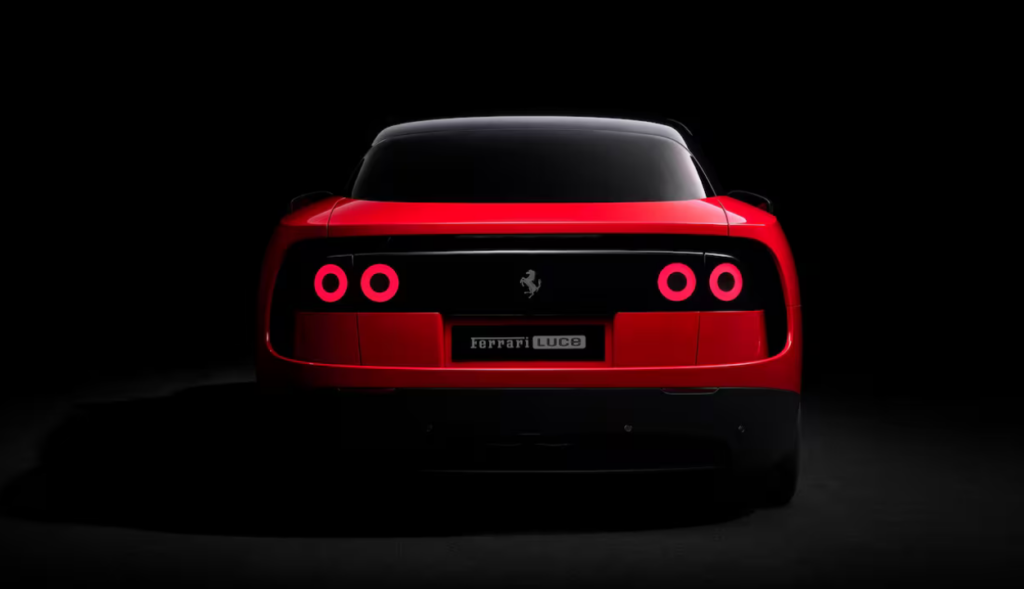
Exterior design is by Flavio Manzoni and Ferrari Centro Stile. The car has five doors with rear-hinged rear doors, a flying bridge C-pillar, a windscreen that flows directly into the bonnet with almost no visible shutline, and wipers that park at either side of the screen rather than the conventional centre position. The slender LED light bars front and rear are barely there. The shutlines throughout are, according to Top Gear Philippines who saw the car in the flesh, breathtakingly precise. It is a highly considered piece of design that is unmistakably not a conventional Ferrari and unmistakably not a conventional anything. Whether it is beautiful in the way that a 250 GTO is beautiful is a question only time can answer. Right now, in photographs, it provokes. In the flesh, it apparently commands respect. That is a reasonable starting position for a first electric Ferrari.
Ferrari has been clear this is a regular production model, assembled at a new dedicated E-Building facility in Maranello, and positioned as an addition to the lineup rather than a replacement for anything. Combustion engines remain. The 849 Testarossa remains. The F80 remains. The Luce exists alongside them for customers who want a five-seat Ferrari that can cover 330 miles on a charge and be driven by the kind of person who previously drove a Bentley Flying Spur or a Rolls-Royce Ghost. Ferrari has identified that customer. Ferrari has built them a car. Ferrari has asked Jony Ive to make it the most beautiful thing they have ever sat inside.
REVMAG VERDICT
The Ferrari Luce is the most important new Ferrari since the Enzo and the most controversial since the Purosangue. It is 1,035 horsepower, rear-hinged doors, Jony Ive, 330 miles of range, an acoustic interior that is honest about what it is and a weight figure that will dominate every conversation about it until someone drives it and reports back. Ferrari has not made a quiet or cautious entrance into electrification. They have arrived at it the way Ferrari arrives at everything: loudly, expensively, on their own terms, and completely convinced they are right. The weight question is real and will be answered when we drive it. Everything else about this car suggests that the answer will be more convincing than the number suggests it has any right to be. We need to drive it. Everything changes when we do.
FREE EVERY FRIDAY
The Rev Report. The week in cars, in five minutes.
The Ferrari Luce, the Canadian Grand Prix, the Brabus Bodo and everything else from the biggest week in cars this year lands in this Friday’s Rev Report. Free, every Friday morning, straight to your inbox. No spam, no fluff.