
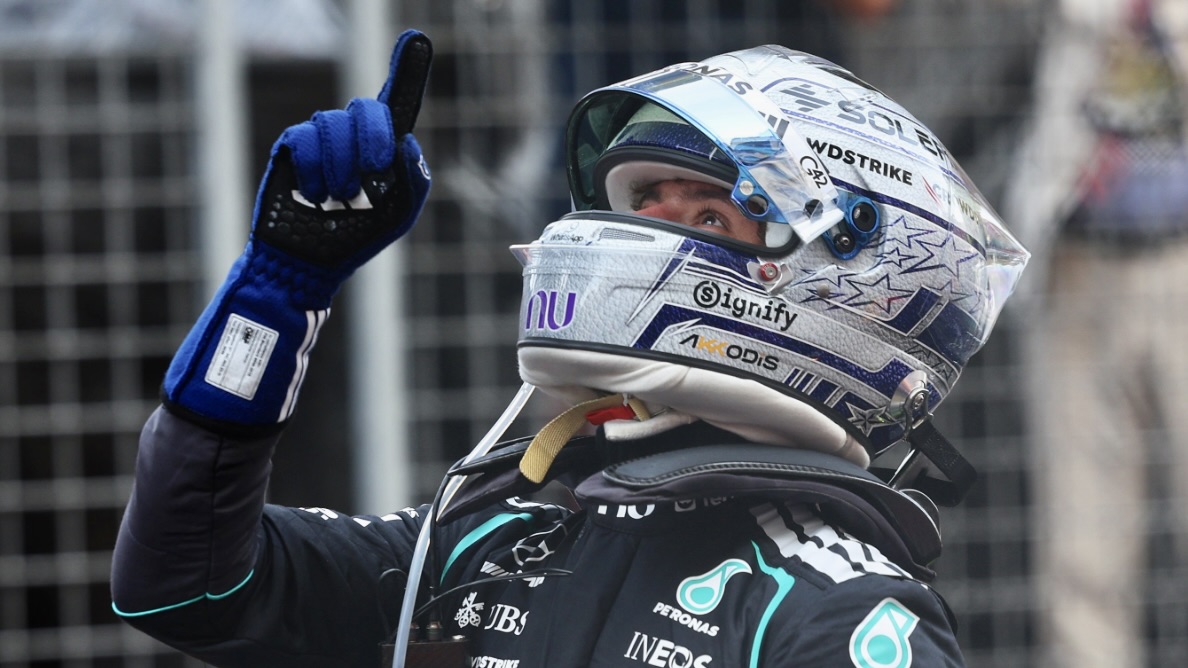
Kimi Antonelli started from pole, absorbed every safety car, every restart, a penalty for his own teammate, a crash by his rival, and 78 laps of the world’s most unforgiving circuit to win his fifth consecutive Formula One grand prix in Monaco. He is nineteen years old. The gap at the top of the championship is now fifty points. Formula One has found itself a new story and it is only just beginning.
Monaco delivers chaos. This is not a controversial statement. It is simply one of the circuit’s most reliable characteristics, alongside the barriers being very close and the overtaking opportunities being essentially theoretical. The 2026 Formula 1 Grand Prix de Monaco delivered chaos in such volume, and at such velocity, and in so many simultaneous directions at once, that by the time the chequered flag fell over Kimi Antonelli’s Mercedes, the story of how the race had actually unfolded required a quiet sit-down and several minutes to process.
The short version: Antonelli wins. His fifth consecutive grand prix victory. A record nobody in the history of Formula One has achieved at the start of a career. Lewis Hamilton is second for Ferrari, despite at one point being handed a five-second time penalty that appeared to have ended any realistic hope of a podium. Isack Hadjar is third after post-race penalties rearranged the finishing order. Charles Leclerc crashed his Ferrari into the barriers on the safety car restart in front of his home crowd and had to walk back to the garage. George Russell received a drive-through penalty for failing to correctly serve a separate pitlane speeding infringement and finished outside the points. Max Verstappen and Lando Norris did not finish. The barriers at Sainte Dévote earned their reputation all over again. Monaco was Monaco.
“It was one of those laps we call the magic lap. I knew the last lap was good and was just hoping it would be enough.”
— KIMI ANTONELLI, AFTER QUALIFYING ON POLE. HIS FIFTH WIN FOLLOWED THE SAME WAY: ENOUGH, AND THEN SOME.
QUALIFYING: THE MAGIC LAP AND THE BROKEN FERRARI
Before the race could deliver its chaos, qualifying delivered its own drama on Saturday evening. Ferrari had dominated practice across all three sessions, with Leclerc topping Friday, Hamilton topping FP2 and Antonelli taking FP3. The expectation was that Leclerc, who lives two minutes from the circuit, who has taken pole here before, who understands this place in a way that goes beyond data, would line up on pole for the race that matters most to him personally.
Instead, what happened in Q3 was one of the defining qualifying sessions of the season. Antonelli, Verstappen and Hamilton ran their first runs so close together that the margin between first and third was barely two tenths. On the second runs, Leclerc briefly went fastest — and then, in his determination to improve further, slid wide and hit the barriers at Tabac, breaking the rear-right corner of his SF-26 and limping to a stop at Rascasse. The home hero, facing a nervous wait to discover the extent of the damage before Sunday’s race, had to watch the session’s final moments from the garage. Antonelli set a 1:12.051, 0.043 seconds faster than Verstappen, in what he described afterwards as the magic lap. That margin, 43 milliseconds — less than the blink of an eye — gave him pole. Russell could only manage sixth despite driving for the championship. The mood in the Ferrari garage on Saturday evening was not a pleasant one.
THE RACE: EVERYTHING HAPPENED AT ONCE
Monaco Grand Prix races do not traditionally offer much action. The standard experience is a procession from pole to flag, occasionally interrupted by the odd strategic variation or mechanical failure, with the circuit’s topology ensuring that anyone who qualifies in the top three starts and finishes there barring catastrophe. The 2026 edition declined to follow this script.
The pivotal sequence came mid-race. Hamilton was given a five-second penalty for speeding in the pitlane — the kind of procedural infringement that at Monaco, where you cannot give time back through pace because there is nowhere to find it, appeared to end any realistic prospect of a podium. The stewards applied the penalty. Hamilton’s team absorbed it. The race appeared to be over for him.
Then Lance Stroll crashed into the wall and triggered a safety car. Under the safety car, Hamilton served his five-second penalty and retained second place — the timing of the intervention converting what should have been a race-defining setback into a minor inconvenience. Fortune, as Monaco occasionally grants it, had arrived at exactly the right moment. Both Ferraris pitted for fresh tyres. Antonelli stayed out and maintained the lead.
The safety car restart was where the race became genuinely extraordinary. Charles Leclerc, who had made it to this point despite the qualifying damage and the strategic complications and the raw pressure of racing in front of his own people, immediately hit the wall on the restart. A second safety car was deployed. Leclerc was furious. Over the team radio, audible to every television viewer on earth, came his verdict: “I’m not even going to take the blame.” He stormed back to the garage. His race was over. Whatever the Ferrari technical debrief will contain this week, it will include that specific radio message being played several times.
THE FINAL RESTART AND THE IMPLOSION OF RUSSELL’S TITLE BID
The second red flag cleared — the gap between suspension and restart stretching to 35 minutes — and the race restarted with Antonelli ahead, Hamilton behind and the championship picture about to be reshaped dramatically. Hamilton threw everything he had at Antonelli through the closing laps and could not find a way through. The streets are too narrow, the gap was too consistent, and Antonelli is too good. Hamilton crossed the line second. It is the best result of his season in a Ferrari and deserves acknowledgment on its own terms.
Behind them, Pierre Gasly crossed the line third on the road — and was then handed two five-second time penalties in the post-race stewards’ hearing, which dropped him to seventh and handed Isack Hadjar his first Formula One podium. A Red Bull driver on the Monaco podium after a race in which Verstappen did not finish is one of the stranger storylines of an already strange afternoon. Hadjar took it with quiet satisfaction.
The Russell situation deserves a paragraph of its own. Also penalised for pitlane speeding, Russell failed to serve his penalty correctly during the safety car period. The resulting drive-through penalty dropped him out of the points entirely. His championship deficit, which was 43 points before Monaco, is now 50 points. He has been to Monaco and come away with nothing in a race where Antonelli came away with everything. The psychological weight of that is significant. Russell is fast enough to win this championship. Whether the luck turns in his direction before the gap becomes insurmountable is the question that defines the rest of the season.
The rest of the attrition list reads like a roll call of the race’s ambitions: Norris retired with battery issues, ending the defending champion’s Monaco weekend without a point. Verstappen did not finish. Carlos Sainz retired late for Williams. Colapinto made contact with Sainz to end that race as well. The Racing Bulls of Lawson and Lindblad, meanwhile, navigated all of this to finish fifth and sixth, producing one of the team’s finest results in its short history. That double points finish in Monaco, against this field, in these conditions, should not be understated.
THE CHAMPIONSHIP AFTER MONACO
Five races. Five victories. Antonelli has now won every Formula One race he has entered. The record is his alone — nobody in the sport’s 76-year history has won their first five consecutive races. He is 19 years old. He was born in 2006, the year Michael Schumacher was in his final season at Ferrari. He qualified at Monaco in 1:12.051, 0.043 seconds faster than Max Verstappen, and described it as a magic lap without any visible sign of tension. He then controlled a race that destroyed the campaigns of Leclerc, Verstappen and Norris simultaneously, while his own teammate suffered a drive-through penalty, and emerged with 25 points and a 50-point championship lead. Barcelona is next week. The championship is, on current evidence, Antonelli’s to lose.
Whether Russell can close it remains the only interesting question about the Drivers’ Championship right now. The gap is significant, not insurmountable. Russell needs a sequence of weekends where the reliability holds, the luck turns and his own performance, which has been there consistently, converts into results rather than misfortune. Monaco was not that weekend. Barcelona might be. The European summer is long and the season is only six races old.
REVMAG VERDICT
Monaco 2026 will be remembered as the race that Kimi Antonelli won fifth, the race that Leclerc lost at home on the safety car restart, the race that Russell’s championship hopes survived but barely, and the race that Hamilton drove with the kind of composed intelligence that reminds everyone why he has seven world championships. Antonelli’s record is now five from five at the start of a Formula One career. The barriers of Monaco, which end the ambitions of great drivers with perfect impartiality, did not end his. He went from pole to flag through chaos and came out the other side with exactly the result he needed. He is extraordinary. The rest of the season will determine whether that is extraordinary or historic. Right now, it looks like historic.
FREE EVERY FRIDAY
The Rev Report. The week in cars, in five minutes.
Race reports, car news, and everything worth knowing lands in the Rev Report every Friday morning. Free. No spam. Join thousands of readers who start their weekend with it.