
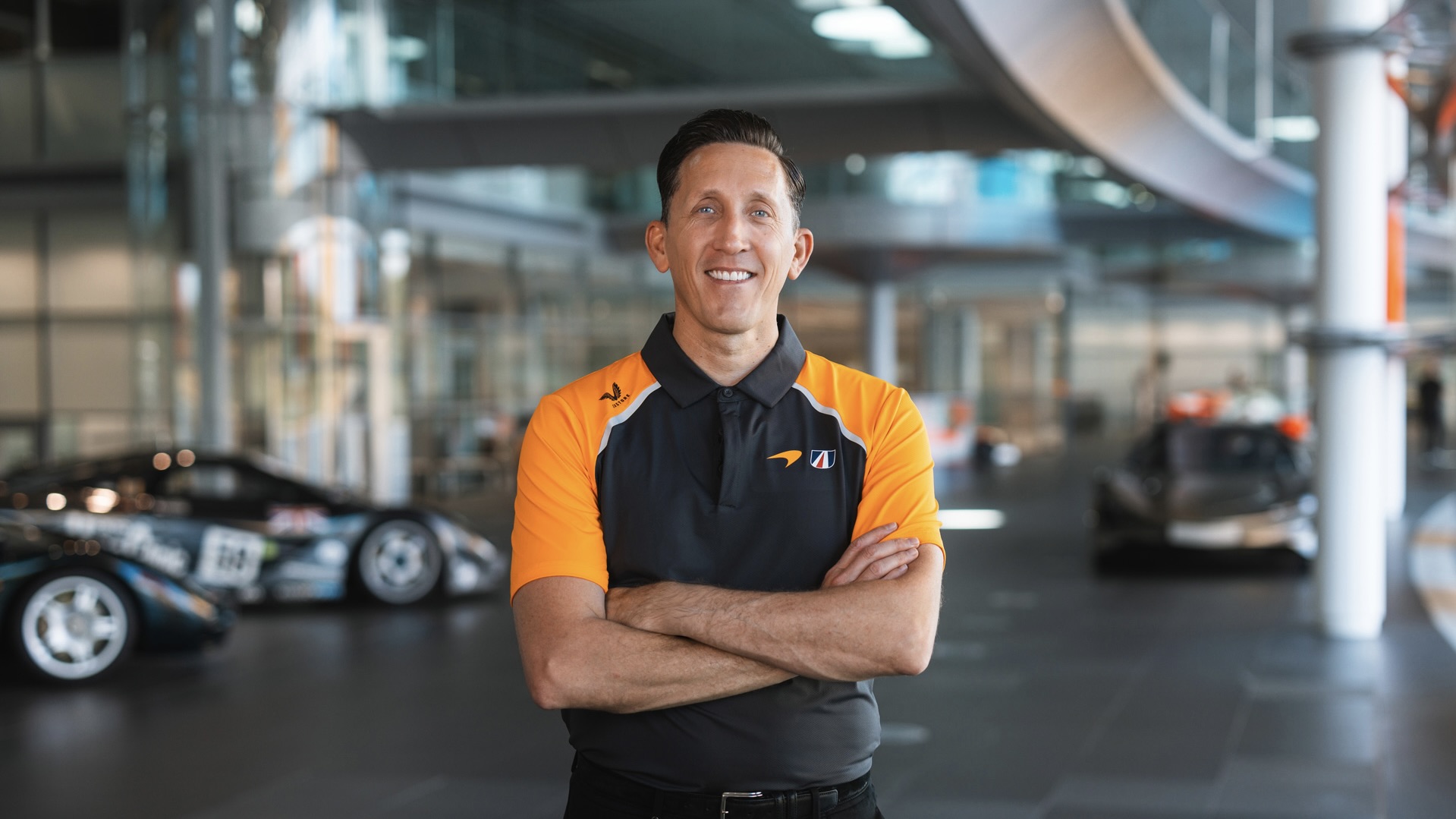
James Barclay on legacy, leadership and bringing McLaren back to the top of endurance racing
There are people who talk about pressure and people who have lived it. James Barclay, Team Principal of McLaren United Autosports and Executive Director of McLaren Endurance Racing, is firmly in the second camp. The man tasked with steering McLaren’s return to Le Mans after a thirty year absence, he speaks with the measured confidence of someone who has thought deeply about what this moment means and what it will take to do it justice.
We sat down with him in Monaco, where the MCL-HY had drawn a crowd of its own, and asked him everything.
What does bringing McLaren back to Le Mans feel like from where you’re standing?
“A massive honour. McLaren has an incredible history in Formula 1, but beginning with Bruce it was also synonymous with Can-Am. And incredibly, we came in 1995 and won. So it’s part of our DNA.”
He pauses, letting that land before continuing.
“It’s a real honour to bring McLaren back to golden era sports car racing. Nine manufacturers competing in Hypercar — there have never been that many manufacturers in the top category. So it’s not just an honour to be bringing McLaren back, we’re doing it at a time when the competition is incredibly exciting. Ferrari is there. Ford is coming in 2027. So they join the same year we join. It’s got all those ingredients to make it incredibly exciting.”
It is a compelling picture. McLaren returning not to a quiet corner of endurance racing, but to what is arguably the most competitive era the sport has ever seen.
Thirty Years
Thirty years is a long time to be away from anywhere. To return carrying the weight of a 1995 Le Mans victory, in a category where Ferrari and Porsche have been refining their programmes for years, would test anyone’s nerve.
Is there pressure?
“As soon as you wear McLaren, there is, of course, pressure. But pressure is a privilege. Pressure makes diamonds, all the analogies. That’s a positive thing. In our sport, pressure is part of it. Any top sport is — no sports person is doing it just for the fun of it. It’s about pressure. But we enjoy that. We’re racers and we want to compete against the best.”
He leans into the point with the clarity of someone who has made peace with what he’s taken on.
“Our job is to write new chapters of success. But we’re also super humble. We know how competitive it is. Our job is to keep our feet on the ground, do our homework, do our job really well. And if we do that, I’d like to think we’ve got all the right ingredients to put ourselves at the front of the field.”
The Human Race
Le Mans is unlike anything else in motorsport. While Formula 1 is over in two hours, Le Mans demands twenty four. And while the spotlight falls naturally on the drivers, the real battle is often fought in the pit lane, in the garage, and in the minds of the engineers and mechanics who have been awake for thirty six hours by the time the chequered flag falls.
How does Barclay keep his team sharp through the night?
“That’s a really good question. Sports car racing is physically hard on human beings in the team. By the time you even get to the race at Le Mans, you’ve done a week of testing, practising and scrutineering. You’re practising and qualifying even as you finish in the early hours of the morning. It’s been an endurance challenge just to get to the start of the race.”
The solution, he explains, is both systematic and deeply human.
“Our preparation in advance, our systems, our tools, our processes — they have to be really well prepared. And then the human side is really important. Part of our team is a human performance group that assesses our team’s strengths and where we need to be. The right nutrition, the right sleep patterns. Everything we do as a team is geared around maximising human potential. We do that with our drivers but we also do that with our engineers and mechanics.”
It is a detail that reveals something important about how McLaren approaches this challenge. The car is only part of the equation. The people who build it, run it, and fix it at three in the morning are just as critical to the result.
Writing New Chapters
Barclay returns, unprompted, to the idea of legacy before we finish. Not the pressure of it, but the privilege.
“It’s an honour to be running the team. An honour to be driving for the team. Our job is to write new chapters of success.”
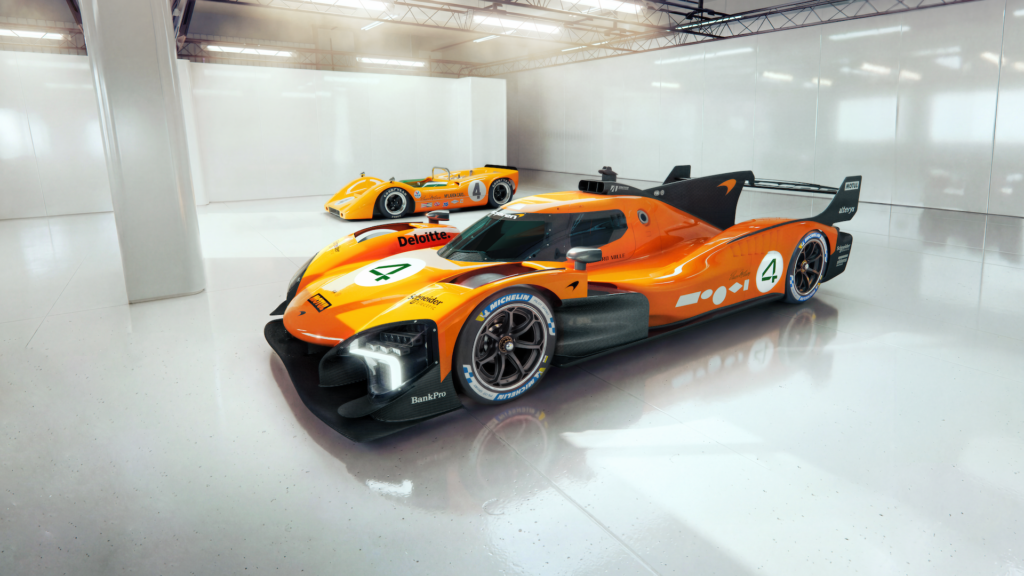
Thirty years ago, McLaren wrote one of the greatest chapters in Le Mans history. In a few weeks, on the same circuit, under the same summer sky, James Barclay and his team will begin writing the next one.
Papaya Rising concludes next week. Part Three: Neil Underwood on engineering the MCL-HY and the technical ambition behind McLaren’s return.
RevMag was invited to the McLaren Monaco showroom for exclusive access to the MCL-HY Hypercar programme.
Want more from the world of hypercars, motorsport and Monaco? The Rev Report lands in your inbox every week. Subscribe below and never miss a story.