
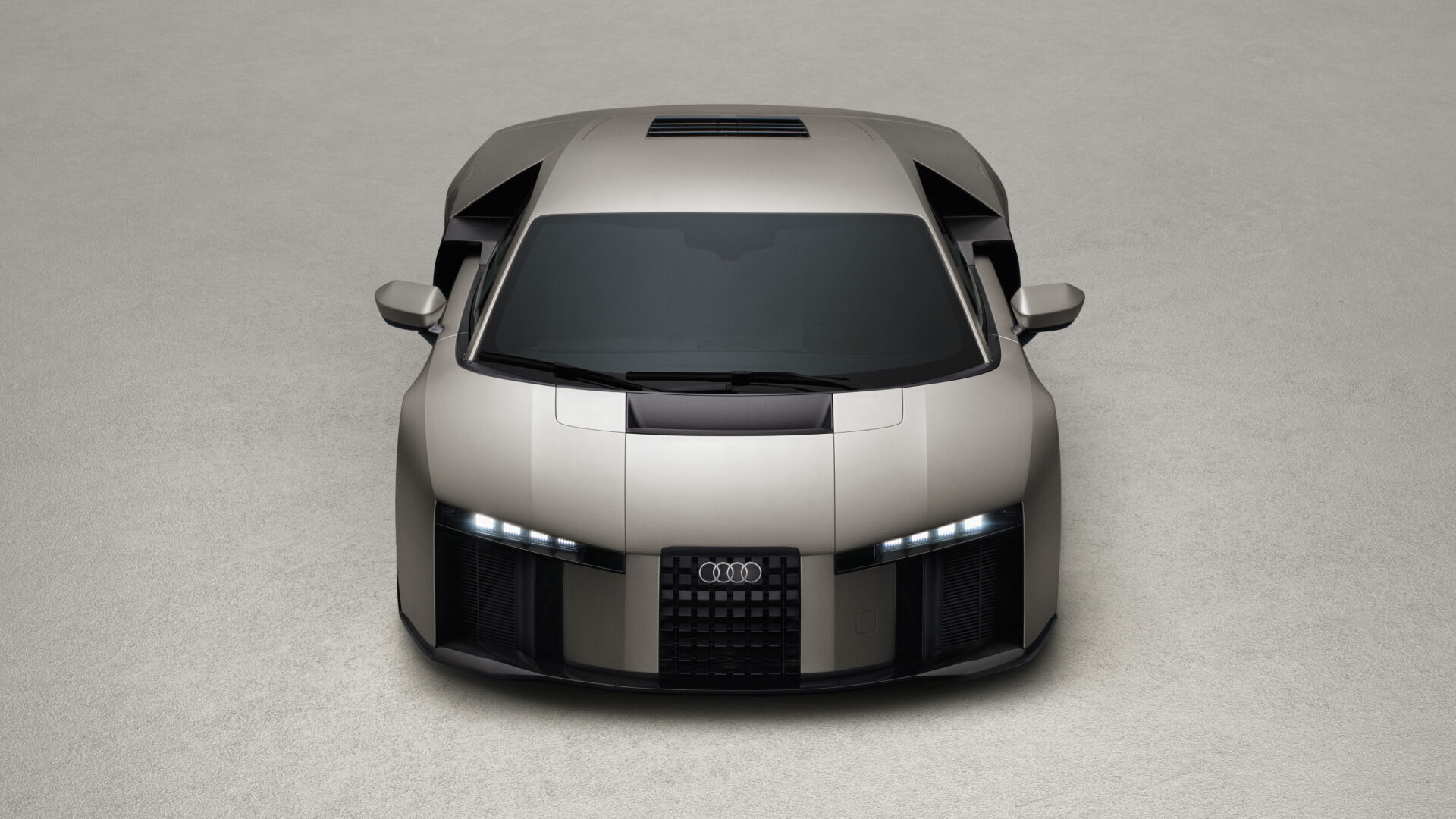
The Audi Nuvolari is the most powerful production Audi ever built. 987 horsepower. A twin-turbo V8 shared with Lamborghini. Three electric motors. F1-derived active aerodynamics. A carbon fibre body. 499 units. €600,000 before options. And a name borrowed from a man Ferdinand Porsche once called the greatest driver of the past, the present and the future. Audi is back in the supercar business. It was worth the wait.
Audi said they would not build a successor to the R8. They said it clearly, more than once, with the kind of corporate finality that is supposed to close conversations rather than open them. The R8 was finished. That chapter was done. Audi was moving in a different direction. And then, on Thursday, June 4 at a reveal event in Antibes, they unveiled the Audi Nuvolari — a mid-engined, twin-turbocharged, hybrid V8 supercar with 987 horsepower, a carbon fibre body, 499 units and a starting price of €600,000. No successor to the R8. This is not a successor to the R8. It is, coincidentally, a mid-engined Audi supercar with roughly the same proportions as the R8, considerably more power, and a name that is considerably better. But it is absolutely not a successor. Audi has been very clear about this.
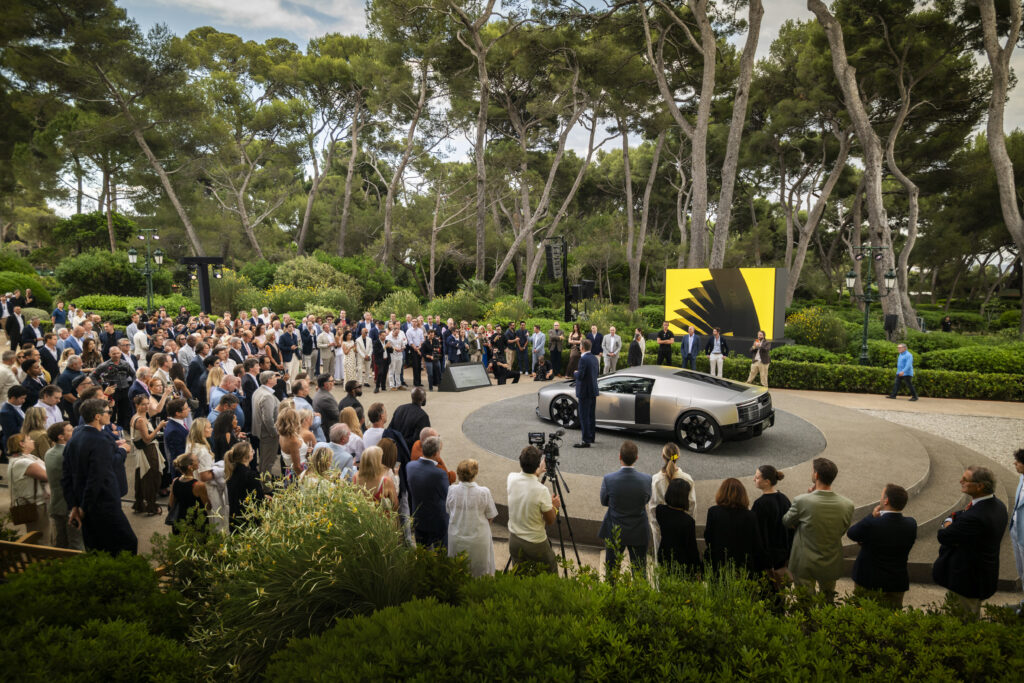
We will say it plainly: the Nuvolari is the most exciting Audi since the R8 and the most important car from Ingolstadt in over a decade. It arrives as Audi enters Formula One for the first time, as the brand attempts to reshape its identity under the “Radical Next” design philosophy, and as rivals Porsche and Lamborghini have raised the bar for what a performance car from a German manufacturer should feel like. The Nuvolari is Audi’s response to all of that simultaneously. Whether it is sufficient will be answered when people drive it. On paper, it is formidable.
“With the Audi Nuvolari, we are accelerating technological progress, focusing on technology, performance and execution through teamwork.”
— GERNOT DÖLLNER, CEO, AUDI AG
THE ENGINE AND THE LAMBORGHINI CONNECTION
At the heart of the Nuvolari is a 4.0-litre twin-turbocharged V8 producing 789 horsepower and 538 lb-ft of torque from combustion alone — codenamed L411 and shared with the Lamborghini Temerario. Both engines rev to 10,000rpm, and CarBuzz correctly noted they are all but identical. Audi’s CTO Rouven Mohr previously held the same role at Lamborghini and oversaw the Temerario’s development, making the technology transfer a logical consequence of the VW Group’s shared infrastructure rather than a shortcut. Three axial-flux electric motors bring the combined total to 987 horsepower — matching precisely the original Bugatti Veyron, which is unlikely to be a coincidence. A 7.3kWh lithium-ion battery supports short-distance pure electric driving. Partial assembly takes place at Lamborghini’s facility in Sant’Agata.
THE FORMULA ONE TECHNOLOGY TRANSFER
Audi entered Formula One in 2026, and the Nuvolari is the first road car to carry technology derived directly from that programme. The most significant is quattro predictive ride — a system that monitors inputs at each wheel continuously, pre-emptively adjusting drive distribution, steering and braking before the driver has perceived a change in conditions. It was developed partly through the F1 programme and applied to a road car here for the first time.
The aerodynamics follow the same logic. The Vertical Frame at the front — Audi’s term for its grille architecture — comprises 64 precisely angled tiles channelling airflow through a concealed S-duct in the nose, generating downforce without a conventional front splitter. The deployable rear wing operates across multiple configurations, adjusting drag and downforce balance automatically according to speed and conditions. Both solutions are adapted from single-seater aerodynamic principles and represent a genuine transfer of F1 engineering into a road application rather than a marketing claim.
THE DESIGN AND WHAT THE NAME MEANS
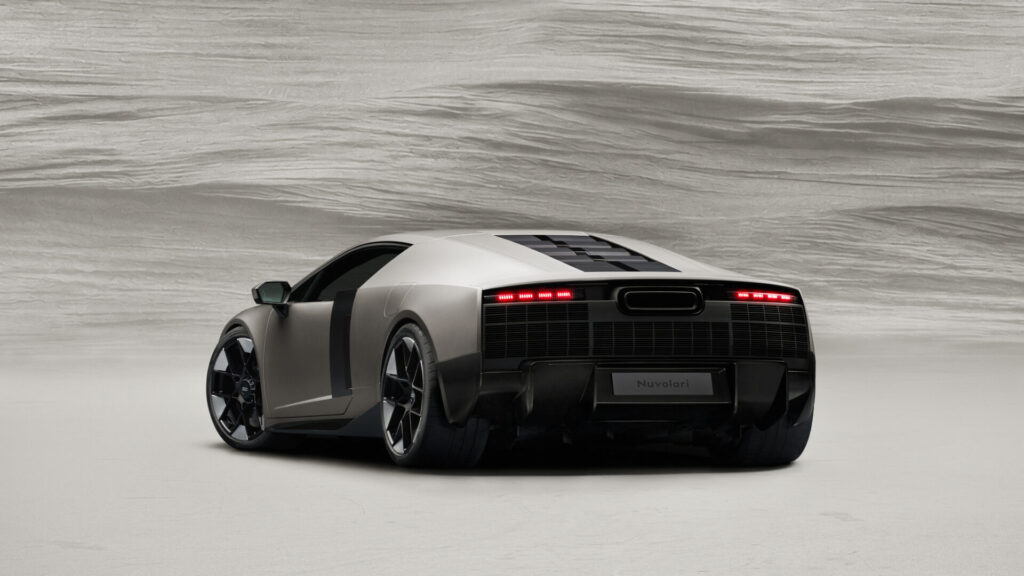
The design follows Audi’s new “Radical Next” philosophy — four principles: clear, technical, intelligent, emotional — applied to a production car for the first time. Four-dot LED headlights mirror the four rings. No conventional rear window: side-mounted intakes replace it to feed the V8. Taut carbon fibre surfaces throughout, with titanium paint as the launch specification. The proportions are those of a proper mid-engined sports car, lower and wider than the R8, with a roofline that drops sharply behind the driver.
Tazio Nuvolari was the greatest racing driver of the interwar years. A small, fearless Italian who drove for Auto Union — Audi’s predecessor — in the late 1930s. At the 1935 German Grand Prix, in front of 300,000 spectators and the assembled German state, he drove an inferior car to a victory nobody expected. Ferdinand Porsche, whose car he beat, called him the greatest driver of the past, the present and the future. Audi has used the name twice before: a 2003 V10 concept and a 2014 TT special edition. Neither was remotely close to deserving it. This one is.
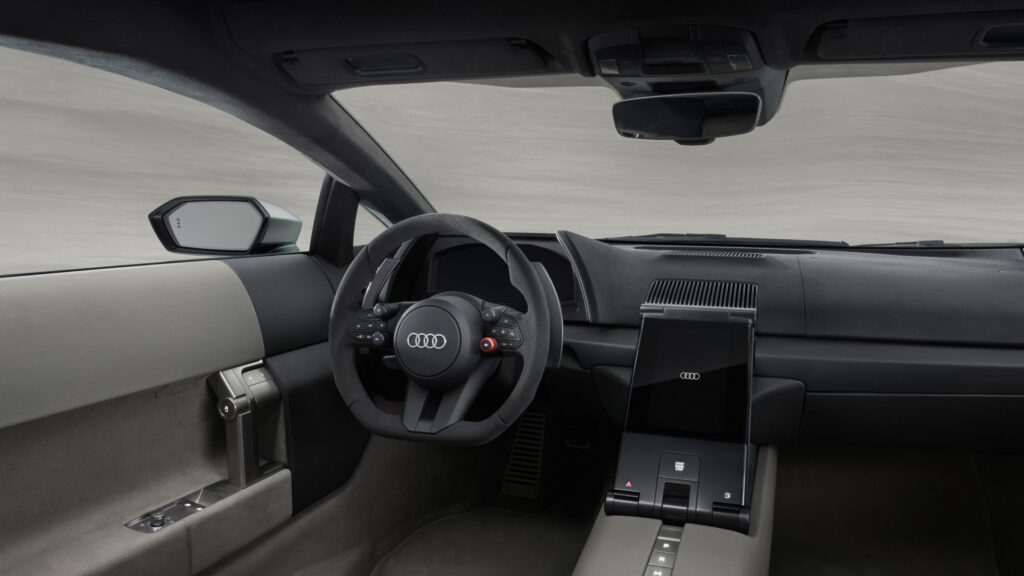
The interior follows Audi’s driver-first brief with genuine conviction. Every essential function is placed directly in the driver’s line of sight. No superfluous controls. Carbon fibre and bespoke leather throughout. Seats integrated into the chassis rather than mounted on top of it. Carbon-backed shells with four-point harness support standard. The brake-by-wire system blends hydraulic and regenerative braking seamlessly, with 10-piston fixed-calliper carbon discs at the front and four-piston units at the rear. It is the specification of a car built for someone who intends to use it properly, which at €600,000 is the only correct approach.
Production runs to 499 units. Deliveries begin in the first half of 2027. The car goes on sale in Europe, the United States, Japan and Korea. Whether finding 499 buyers at €600,000 for the most powerful Audi ever built, with F1 technology and the name of the sport’s most celebrated early hero on the nose, will be difficult is the question Motor1 posed and answered simultaneously. It will not.
REVMAG VERDICT
The Audi Nuvolari is the most significant car Audi has revealed in over a decade. It is not trying to be a Lamborghini or a Porsche. It is trying to be the most capable, most technically sophisticated, most emotionally charged car Audi has ever built, wearing the name of a man who drove inferior machinery to victories that should have been impossible. The 987 horsepower are genuine. The F1 technology is genuine. The 64-tile Vertical Frame, the quattro predictive ride and the carbon body are genuine. Audi said there would be no successor to the R8, and there is not one — there is something considerably better. Whether it drives as well as it reads will be confirmed when we get a key. On current evidence, the answer will be yes. We will not hold back when we find out.
FREE EVERY FRIDAY
The Rev Report. The week in cars, in five minutes.
The Audi Nuvolari, the Monaco Grand Prix, the Ferrari Luce and everything else worth knowing lands in the Rev Report every Friday morning. Free, straight to your inbox, no fluff.