
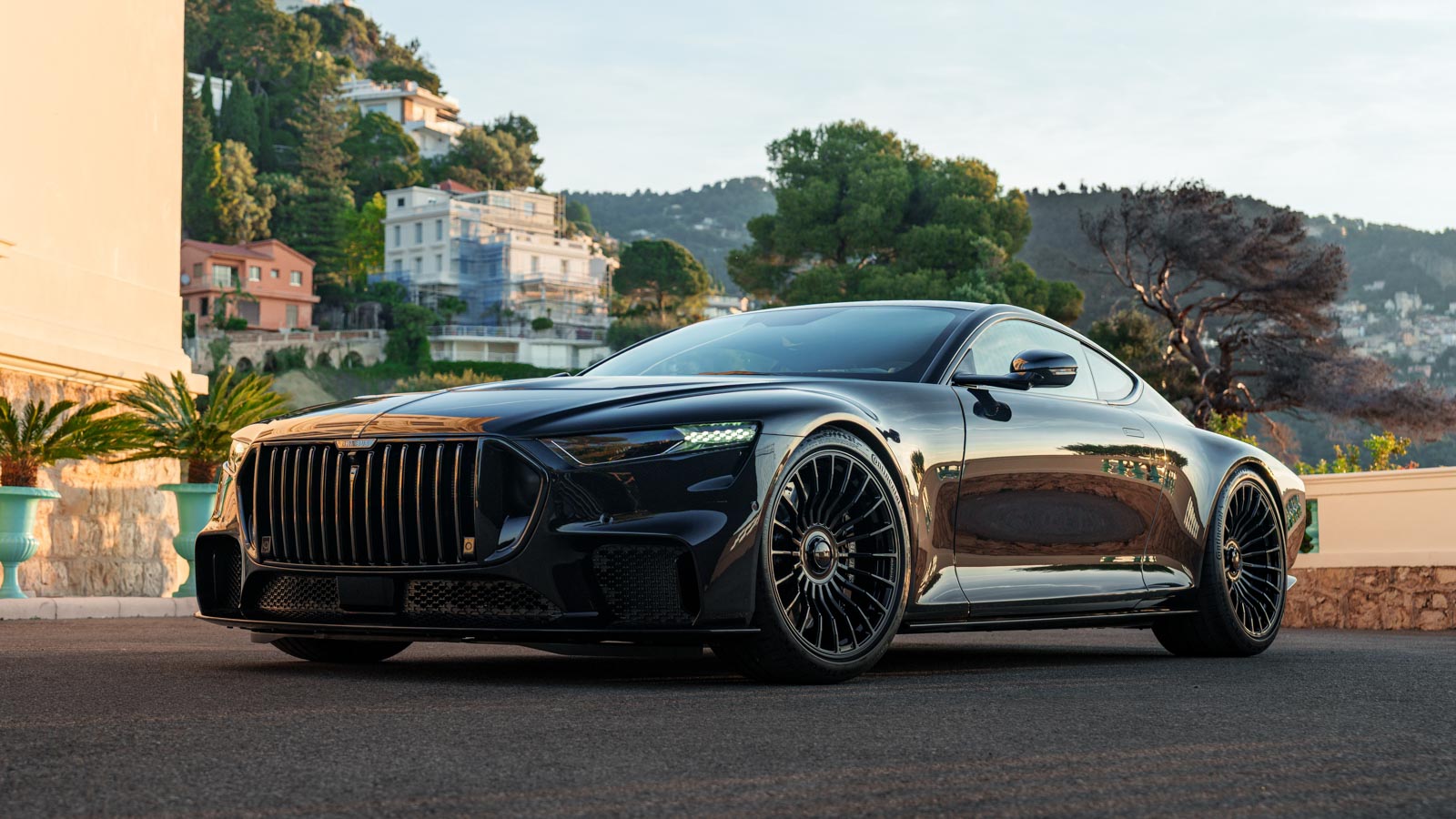
The Brabus Bodo is a coachbuilt V12 hyper-GT with 1,000 horsepower, a carbon fibre body, no electrification, 77 units and a price starting at one million euros. It is named after the man who founded Brabus nearly 50 years ago and never got to see this moment. Consider this the world’s most expensive tribute act.
There is a particular kind of car that exists not to be the fastest, not to be the most technically complex and not to be the most sensible use of a million euros, but simply to be an expression of someone’s vision so complete and so committed that the moment you see it, the price becomes almost irrelevant. Almost. The Brabus Bodo, unveiled at the FuoriConcorso on the shores of Lake Como this week, is that car. It is the car that company founder Bodo Buschmann spent decades talking about building and never got to see finished. He passed away in 2018. His son Constantin has spent the years since making sure it happened anyway, and the result is a 1,000 horsepower, all-black, coachbuilt V12 grand tourer that is simultaneously the most personal and the most spectacular thing Brabus has ever made.
For nearly fifty years, Brabus built its reputation by taking other people’s cars and making them considerably faster, considerably darker and considerably more expensive. Most of them were Mercedes. Some were subtle. Many were not. All of them, in some fundamental way, were still someone else’s car wearing a Brabus suit. The Bodo is different. The body is entirely new carbon fibre, formed in Brabus’ own composite autoclave from pre-preg panels cured under controlled heat and pressure. The only shared visual elements with the underlying Aston Martin Vanquish are the shape of the swan doors, which open slightly upward, and the roofline. Everything else is Brabus, conceived from scratch and executed in the most theatrical material available. Which is to say: carbon fibre. Which is to say: black.
“There was one car he would often talk about, which, in the end, he never got to realise. Today, we are honouring his legacy by finally bringing this dream to life. And of course it can carry only one name: Bodo.”
— CONSTANTIN BUSCHMANN, CEO, BRABUS
WHAT IT ACTUALLY IS
Beneath the new carbon body sits the aluminium chassis of the Aston Martin Vanquish, which is an excellent foundation for reasons that go beyond brand prestige. The Vanquish already places its 5.2-litre twin-turbocharged V12 behind the front axle with a transaxle gearbox at the rear, giving a near-perfect weight distribution before Brabus removes mass with the carbon bodywork. The Bodo measures 5,062mm long, 2,027mm wide and 1,305mm tall, making it meaningfully larger than the Vanquish in every dimension and giving it the proportions of a proper grand tourer: long, low, wide and with a rear that drops away to what Top Gear accurately described as almost boat-tail level. The profile, over 21-inch Monoblock wheels with bespoke Continental tyres, is extraordinary in a way that photographs struggle to capture.
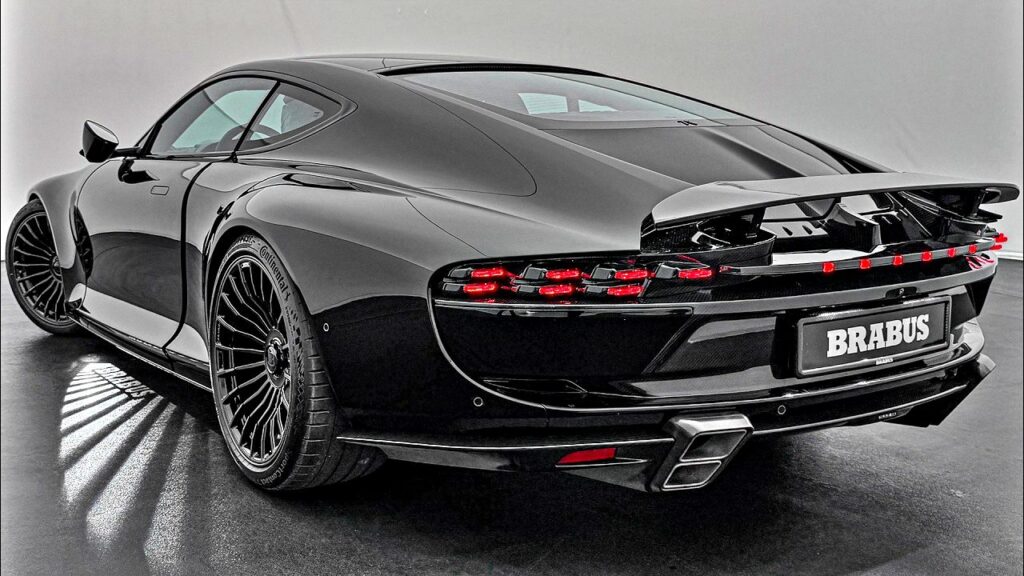
The V12 itself, in standard Vanquish form, produces 823 horsepower. Brabus then adds new turbochargers, reworks the cylinder heads, upgrades the fuel management system and installs a new exhaust, arriving at an even 1,000 metric horsepower and 1,200 Newton metres of torque. The power goes exclusively to the rear wheels through a ZF eight-speed automatic transaxle, modified to handle the extra torque. There is no electric assistance. There is no hybrid system. There is no silent mode. All 1,000 horsepower are combustion. In 2026, when every performance car of note apparently requires a plug and a dedicated app, Brabus has looked at the current state of the hyper-GT market and chosen to go the other direction entirely. Deliberately.
THE INTERIOR AND THE DETAILS
Step inside and the Aston Martin connection becomes more visible, which is not a criticism. The Vanquish already has one of the finest interiors in the GT class, with a properly luxurious dashboard, a sensibly arranged central touchscreen and Apple CarPlay Ultra that makes the car usable rather than performatively technical. Brabus keeps all of this and adds its own layer: black leather throughout, exposed carbon fibre trim, extended carbon shift paddles, a revised steering wheel with carbon details and a Brabus B logo, and ergonomically contoured seats with the Bodo’s silhouette embroidered into the backrests. The door panels carry Bodo Buschmann’s personal signature. Shadow Grey accents, special sill plates and a panoramic roof that prevents the all-black cabin from becoming oppressive complete a specification that is, in the most precise sense of the word, considered.
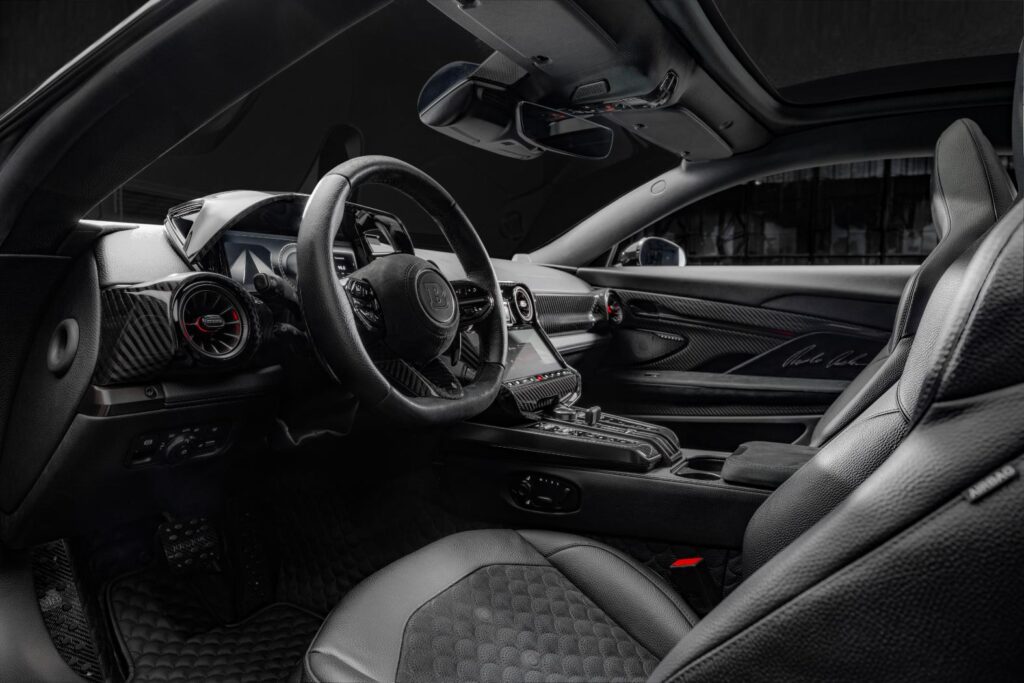
Brabus has also, because of course they have, incorporated carbon fibre components with real gold detailing woven into certain elements. A blockchain-based digital product passport in the cargo compartment provides verified documentation of authenticity, ownership and vehicle specification. Each buyer receives their keys and a weekender bag in the same leather as their car’s interior. Whether the weekender bag is the detail that closes the deal at this price point is a question only the 77 buyers can answer, but the gesture is at least a good one. Driving modes run from Wet through to Super Plus, with adaptive suspension developed with KW Automotive adjustable from comfort cruising to circuit-ready firmness. A front axle lift system handles ramps and speed bumps, which is a wonderfully prosaic detail on a car this extreme.
WHY THIS MATTERS
The number 77 is not accidental. It references 1977, the year that Bodo Buschmann incorporated the business that would become one of the most recognised performance tuning operations on earth. A small family business in Bottrop, Germany, that grew over five decades into a company large enough to have its own composite autoclave, its own design studio and a client list that spans every continent. Bodo Buschmann built that business on a single conviction: that whatever Mercedes made, he could make it better, faster and more individual. His son has spent eight years since his father’s death deciding what to do with that legacy, and the answer turns out to be this: build the car his father described but never built, name it after him and limit it to the number that started everything.
This is also, as Top Gear correctly noted, a signal of direction. Brabus has been edging towards coachbuilding for some years, with the GTS Coupe based on the Mercedes SL63 representing an earlier step in this evolution. The Bodo goes further. It is not a tuned Aston Martin any more than the Bentley Bentayga is a tuned Volkswagen Touareg. The shared underpinnings are a starting point, not the finished article. What emerges is a car with its own visual identity, its own emotional weight and its own reason to exist that has nothing to do with the car it is based upon. Whether Brabus uses this foundation to build a fully independent model in the future is an open question. For now, the Bodo answers a different and more personal one.
REVMAG VERDICT
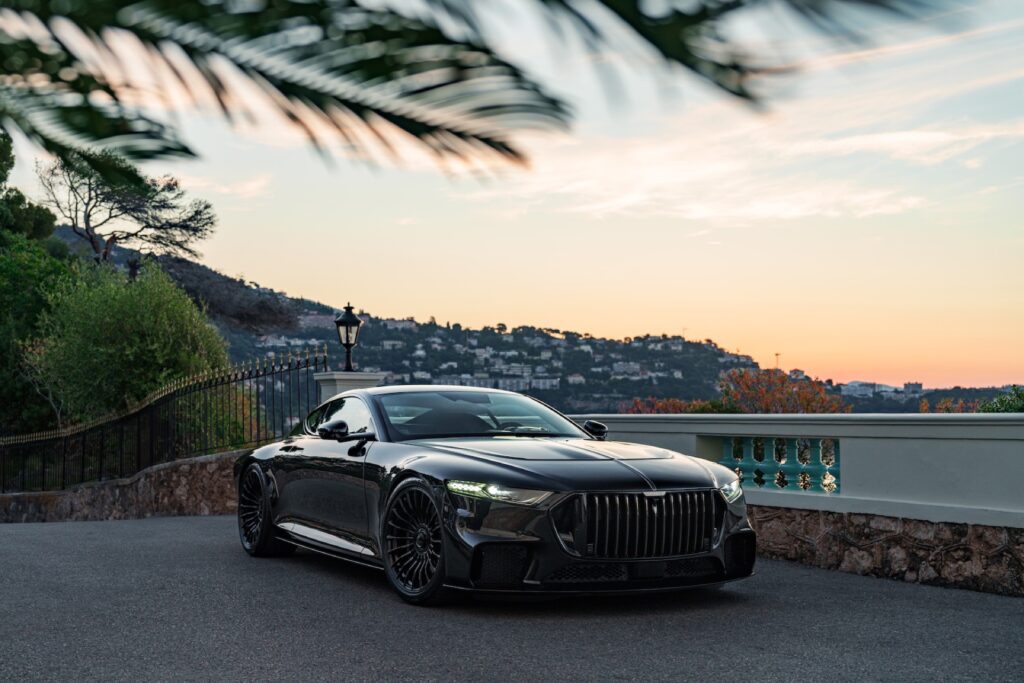
The Brabus Bodo is a one million euro tribute to a man who spent his life making other people’s cars better and spent years dreaming about building one of his own. The car itself is spectacular: 1,000 horsepower, no electrification, 360 kilometres per hour, 77 examples, a carbon body built in-house and a profile that will stop traffic in every city on earth. It is not cheap, it is not practical and it does not need to be either of those things. It is the fulfilment of a promise made to a founder who is not here to see it. Some cars exist because the market demands them. The Bodo exists because a son decided his father deserved better than an unrealised dream. As reasons for building cars go, that one is difficult to argue with.
FREE EVERY FRIDAY
The Rev Report. The week in cars, in five minutes.
Stories like the Brabus Bodo land every week. So do the spy shots, the debuts, the race results and the occasional million-pound hypercar that sells out before you finish reading about it. The Rev Report rounds up everything worth knowing from the world of cars and delivers it to your inbox every Friday morning, completely free. No spam. No fluff. Just the week’s best automotive stories, curated by the RevMag team. Join thousands of readers who start their weekend with it.