
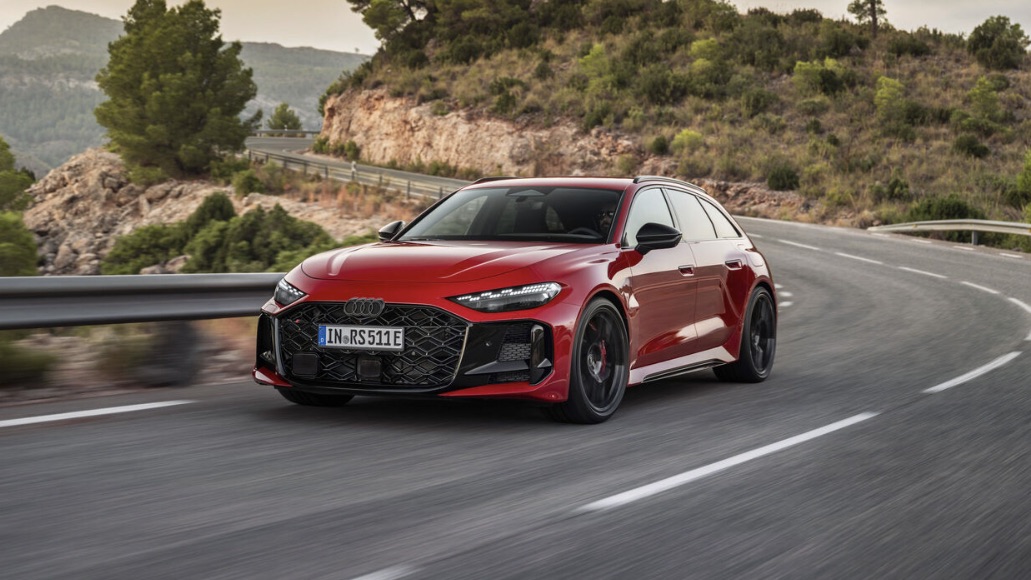
The Audi RS 5 has officially entered its electrified era — and before you start mourning the old ways, it’s worth looking at what Audi Sport has actually built here. This isn’t some polite eco-gesture wearing an RS badge. It’s a 470 kW plug-in hybrid with torque-vectoring wizardry and enough engineering complexity to make your old naturally aspirated V8 look like a lawnmower.
Under the bonnet sits a familiar 2.9-litre twin-turbo V6 producing 375 kW (510 PS). That’s now joined by a 130 kW electric motor, bringing combined system output to 470 kW. In plain English: it’s properly quick. The hybrid system isn’t there to neuter the car — it’s there to fill gaps, sharpen response and, when required, let you glide silently through town pretending to be responsible.
The real headline, however, is the drivetrain. The new RS 5 introduces quattro with Dynamic Torque Control, featuring electro-mechanical torque vectoring at the rear axle — a production first for Audi. It can actively shift torque between the rear wheels in milliseconds, recalculating distribution up to 200 times per second. There’s also a preloaded centre differential constantly managing front-to-rear torque. In theory, that means less of the traditional nose-heavy Audi push and more of something resembling rear-driven playfulness. In theory.
Visually, the RS 5 hasn’t gone soft either. It’s roughly nine centimetres wider than the standard A5, with swollen arches, aggressive air intakes, a honeycomb grille and a proper diffuser framing matte oval exhaust tips. The Matrix LED headlights now feature a checkered-flag light signature — slightly theatrical, yes, but at least it signals intent.
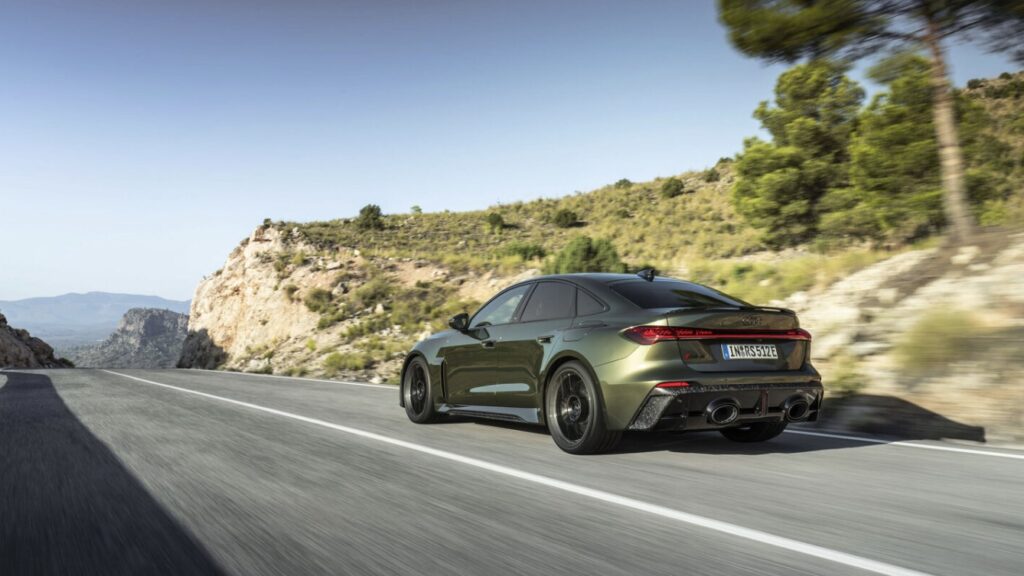
Beneath the widened bodywork sits bespoke RS suspension with twin-valve dampers designed to deliver both comfort and cornering composure. Audi claims the system reduces pitch and roll significantly while reacting rapidly to surface changes. You can have large steel brakes or optional carbon ceramics, and 20- or 21-inch wheels depending on how dramatic you want your tyre bills to be. Tick the Audi Sport package and the top speed rises to 285 km/h, because of course it does.
The hybrid angle does add versatility. The RS 5 can run on electric power alone in town, which means you can creep past pedestrians without announcing yourself like a touring car. Yet once you select the more aggressive drive modes, the system is designed to combine electric punch with V6 muscle seamlessly. Audi even includes a new driving experience interface that lets you analyse routes and, in certain modes, monitor drift angles — because apparently we now live in a world where hybrids track your slides.
Production takes place in Neckarsulm, Germany. In Germany, the RS 5 Sedan starts at €106,200, with the RS 5 Avant at €107,850. Orders open in the first quarter of 2026, with deliveries expected from summer 2026.
So yes, the RS 5 is now a plug-in hybrid. The world has moved on, emissions rules have tightened, and Audi Sport has responded the only way it realistically could: by making it faster, more complex and arguably more capable than before. Whether it feels as raw as its predecessors is another matter entirely — and that’s the bit we’re all really waiting to find out.