
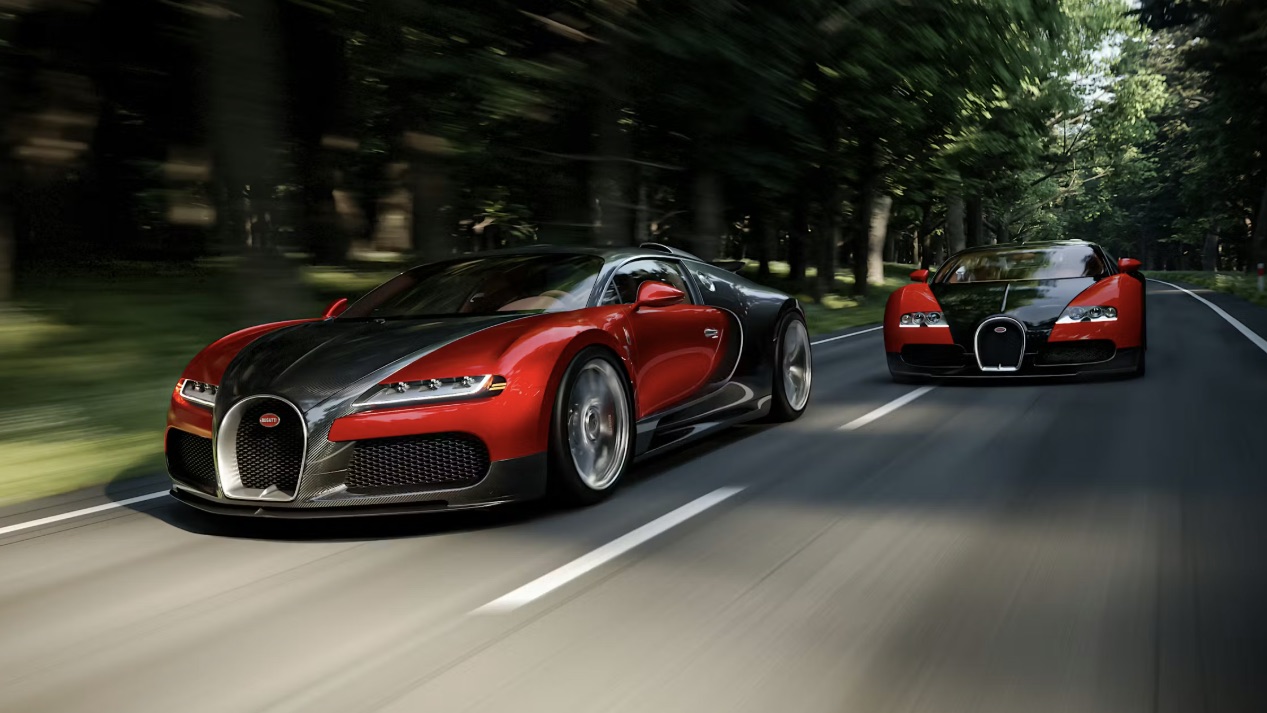
Twenty years ago, Bugatti didn’t just build a fast car, it quietly detonated the rulebook. The Veyron arrived with 1,001 horsepower, a top speed north of 400 km/h, and the sort of refinement that made every other supercar feel like it had been assembled in a shed. It didn’t shout. It didn’t posture. It simply existed… and everyone else panicked.
Now, Bugatti has decided to look back, but not sentimentally. The result is the F.K.P. Hommage, the second creation under Programme Solitaire, and a deeply considered tribute to the man who made the Veyron possible in the first place: Professor Dr. Ferdinand Karl Piëch. The engineer who looked at “impossible” and replied, “Fine, we’ll do it properly then.”
The Veyron’s origin story, as it happens, doesn’t begin in Molsheim, or even in Germany, but on a Japanese bullet train. It was there that Piëch famously sketched the idea for a W-engine configuration — a mechanical thought experiment that would eventually evolve into the quad-turbocharged W16. This was not a man afraid of complexity. After all, he’d already unleashed the VR6, the W8, the W12… so naturally, the next logical step was something with sixteen cylinders and enough boost to bend physics.
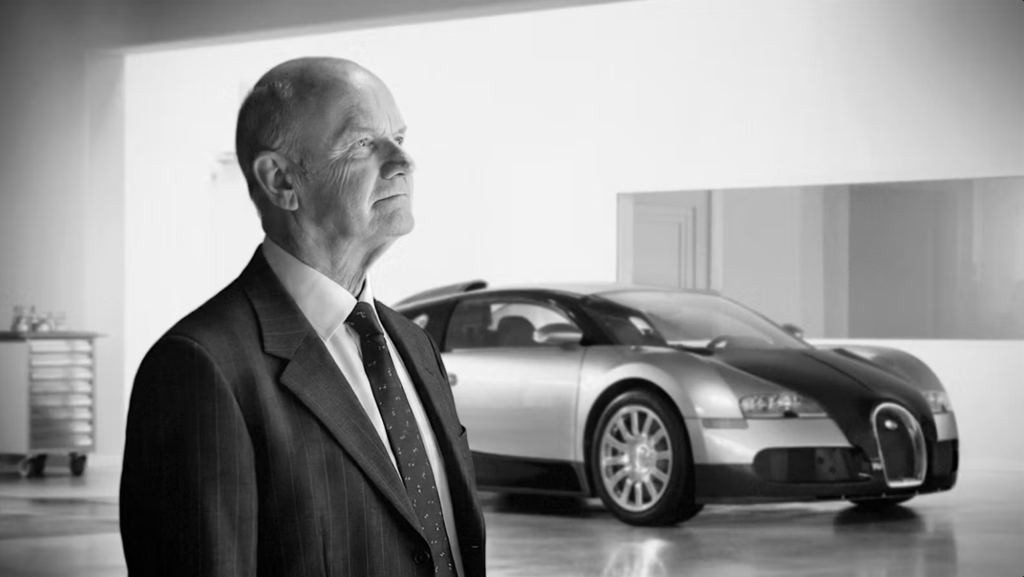
When the Veyron concept debuted at the 1999 Tokyo Motor Show, penned by a young Jozef Kabaň under Hartmut Warkuß, it looked nothing like the aggressive wedges of the era. While everyone else was shouting with sharp angles and theatrical wings, the Bugatti reclined. Calm. Confident. Almost smug. It had Bauhaus restraint wrapped around outrageous engineering — and somehow, two decades later, it still looks fresh.
The F.K.P. Hommage builds on that philosophy, but underneath, it’s very much a modern monster. Power comes from the most evolved version of Bugatti’s W16 — the 1,600-horsepower quad-turbo engine first seen in the Chiron Super Sport. This is the drivetrain that finally ticked off Piëch’s long-standing obsession with terminal velocity by breaching the 300-mph barrier. Bigger turbos, improved cooling, reinforced gearbox — everything has been turned up to eleven, then politely engineered to survive it.
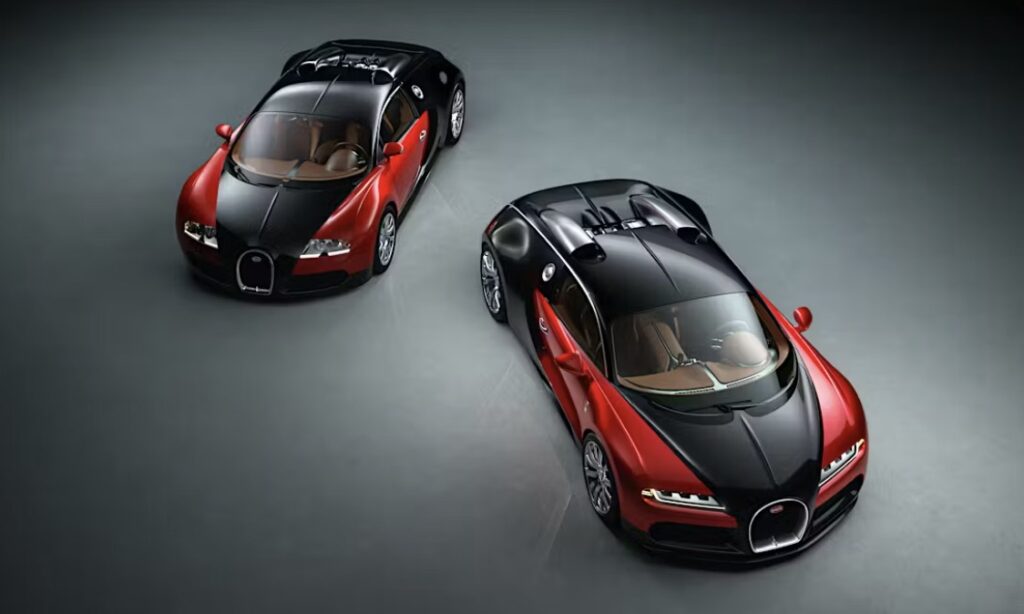
Visually, the changes are subtle but meaningful. The car keeps the Veyron’s laid-back stance and falling beltline — a design choice that still feels rebellious in a world obsessed with sharp creases and angry faces. The iconic horseshoe grille is now fully three-dimensional, machined from a solid block of aluminium and blended seamlessly into the bodywork. The colour split follows the revised panel architecture with mathematical precision, while larger air intakes feed the hungrier engine beneath. Updated wheels — 20 inches at the front, 21 at the rear — wear the latest Michelin rubber, because at this point, anything less would be irresponsible.
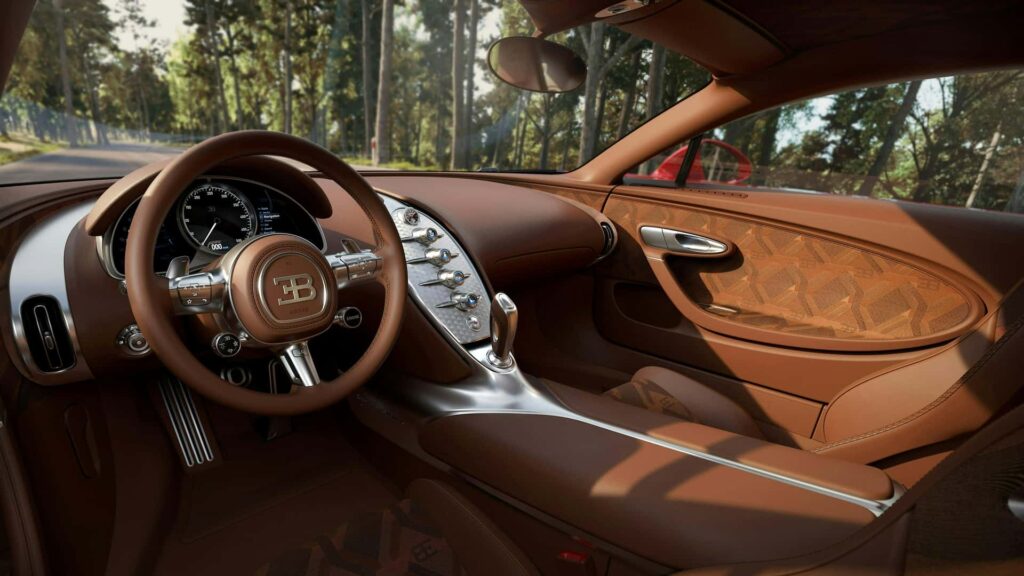
Inside, things change dramatically. This is not a warmed-over Chiron cabin. The interior is a near-clean-sheet rethink, closer in spirit to the original Veyron than any recent W16 Bugatti. The steering wheel is circular again — delightfully unfashionable — and Bauhaus in character. The centre console and tunnel are machined from solid aluminium, because stamping parts would be far too ordinary, alongside an incorporated and far from ordinary 43mm Royal Oak Flying Tourbillon. New Car Couture fabrics, woven exclusively in Paris, replace the old leather-only approach, signalling Bugatti’s next chapter in luxury craftsmanship first seen on their Tourbillon hypercar.
The result is not nostalgia. It’s perspective.
The F.K.P. Hommage doesn’t try to out-shout the modern hypercar arms race. It doesn’t need to. Instead, it reminds everyone that the Veyron was never about excess for its own sake. It was about engineering clarity, intellectual stubbornness, and doing the impossible properly.
And frankly, in an era of electric whirring and touchscreen nonsense, that feels rather refreshing.